Side-by-side
| Model | Connector | Install type | Circuit / speed | Cert | Price |
|---|---|---|---|---|---|
| ChargePoint HomeFlex J1772 (hardwired) | J1772 | Hardwired | Not specified | UL | Check price on Amazon |
| ChargePoint HomeFlex NACS (hardwired) | NACS (Tesla) | Hardwired | 20A or 80A circuit; 9× faster than 120V, up to 45 mi/hr | UL | Check price on Amazon |
| ChargePoint HomeFlex J1772 NEMA 6-50 | J1772 | Plug-in, 6-50 | 50A circuit; 9× faster than 120V, up to 45 mi/hr | UL | Check price on Amazon |
| ChargePoint HomeFlex NACS NEMA 14-50 | NACS (Tesla) | Plug-in, 14-50 | 40A or 50A circuit; up to 7× faster than 110V, 30 mi/hr | UL | Check price on Amazon |
| NexCyber Level 2 40A | J1772 | Plug-in, 14-50, 25 ft cable | 16A–40A adjustable; up to 38 mi/hr | ETL, FCC | Check price on Amazon |
| AIMILER Level 2 32A | J1772 | Plug-in, 14-50, 25 ft cable | 16A–32A, up to 7.68 kW | ETL, FCC | Check price on Amazon |
Quick answer: If you want a charger you can buy today, mount inside or out, and manage from a phone app that also unlocks a huge public network, the ChargePoint HomeFlex line is the straightforward pick — hardwired if your panel is far from the car, plug-in if you already have a 240V outlet. The JuiceBox 40 is the classic 40-amp rival people cross-shop, but it isn't a unit we can quote current specs, pricing or support status for here, so treat it as a "verify before you buy" option rather than an assumed equal. If you mostly care about adding miles overnight for the least money, a plug-in 32A or 40A unit like the AIMILER or NexCyber does the same job for well under half the price.
Why this comparison is trickier than it looks
The JuiceBox 40 built its reputation as a 40-amp, Wi-Fi-connected, plug-in-or-hardwired charger — the same slot the ChargePoint HomeFlex occupies. The problem for a buyer in 2026 is that a home charger is only as good as the company standing behind its app and its warranty. That's the single most important thing to check on any smart charger before you spend the money: is the vendor actively selling and supporting the unit right now, and does the app still work if the servers go away? Go read recent buyer reviews and the manufacturer's own support page yourself before committing to any connected charger — that's a five-minute check that saves a $500 mistake.
ChargePoint's pitch is the opposite of uncertainty: 24/7 support, a mobile app that handles reminders, smart-home links, station finding and charging data, and access to a network of 274k+ stations across North America and Europe plus 565k+ roaming partner stations. That network membership is genuinely useful if you road-trip; it's irrelevant if you only ever charge in your own garage.
Finding the right chargepoint home flex vs juicebox 40 comes down to matching the features to how you will actually use it.
Speeds above are manufacturer figures and all depend on what your car's onboard charger can actually accept. A vehicle capped at 7.7 kW will not go faster because you bought an 80-amp-capable box.
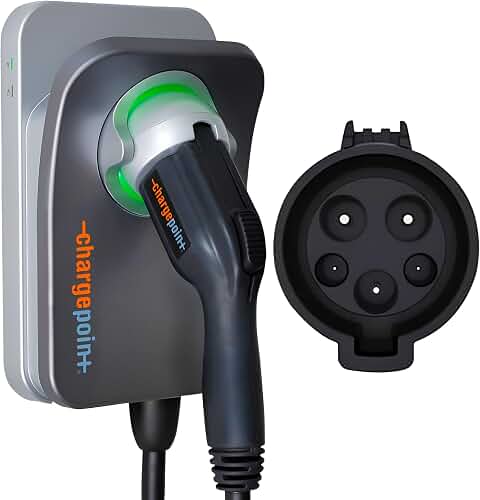
ChargePoint HomeFlex Level 2 EV Charger J1772 - Fast Smart Battery Power Charging at Home for Electric Automobile Vehicles - Hardwired for Electric Car — the clean permanent install
Hardwiring is the tidiest option and the one many electricians prefer outdoors: no exposed plug, no outlet to corrode. The ChargePoint HomeFlex Level 2 EV Charger J1772 - Fast Smart Battery Power Charging at Home for Electric Automobile Vehicles - Hardwired for Electric Car is UL-certified, rated for indoor or outdoor installation by an electrician, and ships with a cold-resistant cable — the detail that matters if you live somewhere the cable gets stiff and unfriendly at 10°F. At $494.00 it costs less than the plug-in 6-50 version, which is unusual and worth noting if you were already planning to pay an electrician anyway.
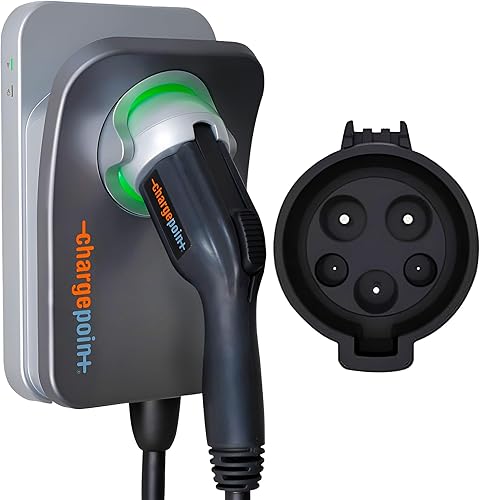
ChargePoint HomeFlex Level 2 EV Charger, Hardwired NACS Charging Station – Tesla Compatible, Fast Charge Solution for Electric Vehicles — the fastest ceiling here
If your car uses the NACS connector and your panel has headroom, the ChargePoint HomeFlex Level 2 EV Charger, Hardwired NACS Charging Station – Tesla Compatible, Fast Charge Solution for Electric Vehicles is the one with the widest install envelope: it works on anything from a 20A to an 80A circuit and is rated 9× faster than a 120V outlet, up to 45 mi/hr depending on the vehicle. Same $494.00 as the J1772 hardwired unit. The adjustable circuit range is the real feature — it means the charger can be dialled down to fit a modest panel now and turned up later if you upgrade service.
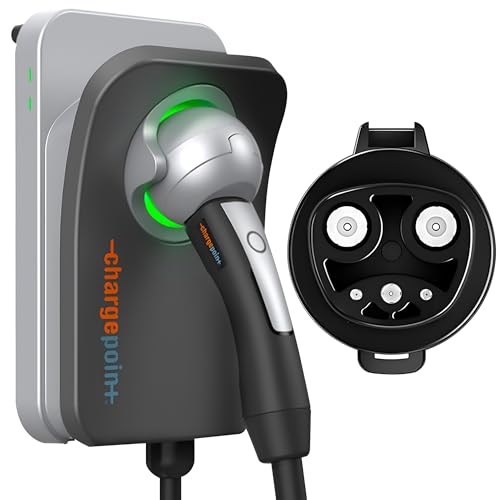
ChargePoint HomeFlex Level 2 EV Charger J1772 - NEMA 6-50 Plug — for an existing 6-50 outlet
Already have a 6-50 receptacle from a welder or an old install? The ChargePoint HomeFlex Level 2 EV Charger J1772 - NEMA 6-50 Plug plugs straight in on a 50A circuit and delivers up to 45 mi/hr, 9× faster than a 120V outlet. It's the most expensive unit on this page at $639.00, so buy it for the convenience of an existing outlet, not because it's quicker than the hardwired sibling. Tesla and other NACS cars need an adapter with this one.
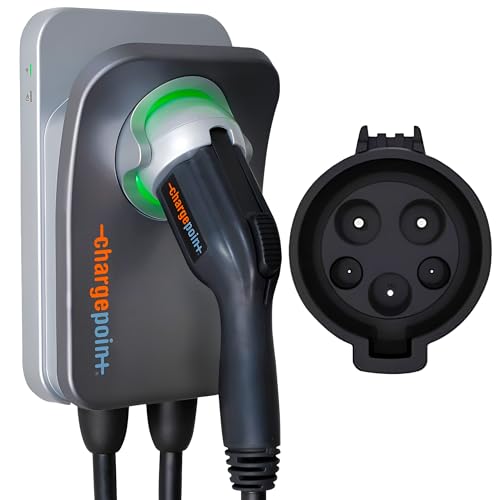
ChargePoint HomeFlex Level 2 EV Charger NEMA 14-50 NACS Plug for Tesla Electric Vehicles - Wall-Mount Fast & Smart Indoor or Outdoor Charging Station for Home, Compatible w/ Tesla Models 3, Y, S & X — the renter-friendly Tesla option
The ChargePoint HomeFlex Level 2 EV Charger NEMA 14-50 NACS Plug for Tesla Electric Vehicles - Wall-Mount Fast & Smart Indoor or Outdoor Charging Station for Home, Compatible w/ Tesla Models 3, Y, S & X is the cheapest ChargePoint here at $449.40 and plugs into a standard 14-50 outlet on a 40A or 50A circuit. It's rated up to 7× faster than a 110V outlet at 30 mi/hr — slower on paper than the hardwired NACS unit, which is the trade you make for a plug you can unplug and take with you when you move. It's explicitly listed as compatible with Tesla Models 3, Y, S and X.
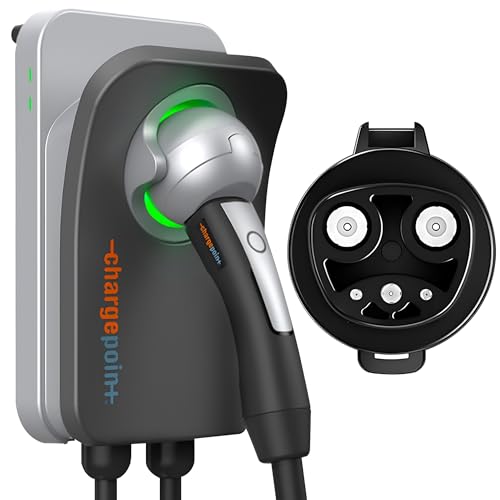
NexCyber Level 2 EV Charger 40Amp with WiFi APP/Plug-Play, 240V NEMA 14-50P Plug, 25FT Cable with ETL Certified, Portable Electric Vehicle Charging Stations EVSE J1772 Connector (40) — 40 amps for a third of the price
This is the unit that actually answers "why pay $500?" The NexCyber Level 2 EV Charger 40Amp with WiFi APP/Plug-Play, 240V NEMA 14-50P Plug, 25FT Cable with ETL Certified, Portable Electric Vehicle Charging Stations EVSE J1772 Connector (40) is $209.99, hits up to 38 mi/hr on a 14-50 plug, has a 25 ft cable, an onboard touchscreen showing amperage, speed, input voltage and delay timer, and amperage adjustable from 16A to 40A. It's ETL and FCC certified against SAE J1772, UL 2231 and related standards, with a 3-year warranty, and works in plug-and-charge mode with no app required — which is exactly what you want if you're nervous about cloud dependency. J1772 only; NACS cars need an adapter, and it's specifically listed as not fitting the 2025 Kia EV6, 2025 Ariya and 2025 Ioniq 5 without one.
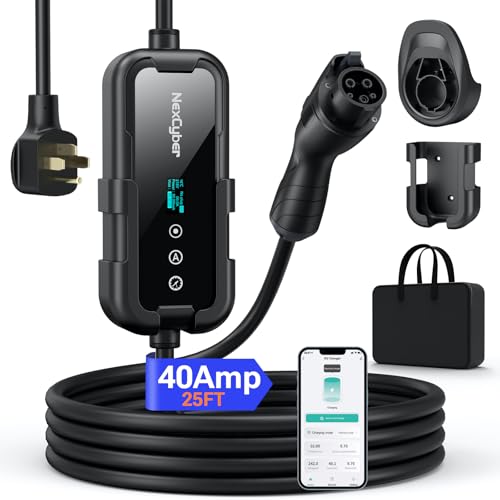
AIMILER Level 2 Electric Vehicle (EV) Charger(WIFI APP/Plug-play), 32A, 25ft Cable ETL Certified, 220V-240V NEMA 14-50P Plug EVSE w/ J1772 Connector, Portable EV Car Charging Stations for Home Level 2 — the small-panel pick
If your electrical panel is tight, 32 amps is often the honest ceiling. The AIMILER Level 2 Electric Vehicle (EV) Charger(WIFI APP/Plug-play), 32A, 25ft Cable ETL Certified, 220V-240V NEMA 14-50P Plug EVSE w/ J1772 Connector, Portable EV Car Charging Stations for Home Level 2 delivers up to 7.68 kW and steps down cleanly: 32A on a 40A breaker, 24A on a 30A breaker, 16A on a 20A breaker, adjustable from the touchscreen or the app. At $199.99 with a 25 ft cable and ETL/FCC listing, it's the value floor here. Same J1772 caveat: NACS cars need an adapter.
The honest trade-offs
You're paying ChargePoint for software and support, not electrons. A 40-amp charger is a 40-amp charger. The $290 gap between the NexCyber and the hardwired HomeFlex buys you UL certification rather than ETL, the ChargePoint app ecosystem, network access, and 24/7 support from a company with a large installed base. If you value being able to phone someone in three years, that's real. If you just want the car full by morning, it isn't.
UL vs ETL is not a quality verdict. Both are recognised testing labs. UL carries more weight with some inspectors and some utility rebate programs — check your local rebate paperwork before assuming either qualifies.
Plug-in units are only as safe as the outlet. A NEMA 14-50 receptacle carrying 32–40 amps for eight hours a night is a genuine fire risk if it's a cheap one badly terminated. Budget for a good outlet installed properly, or hardwire.
Cable length beats headline amperage. The NexCyber and AIMILER both list 25 ft cables. If your parking spot is awkward, that single spec will affect your daily life more than 8 extra amps.
FAQ
Is the JuiceBox 40 still worth buying? Check its current retail availability, warranty terms and — critically — whether its app and cloud service are still supported before you buy. Smart chargers whose maker has stepped back become dumb chargers, which is fine if the hardware keeps working, but you should know that going in. Read recent buyer reviews yourself rather than trusting a spec sheet.
Wallbox vs ChargePoint — how do I decide? The same way you'd decide anything here: connector type (J1772 or NACS), the circuit your panel can support, whether you need hardwired or plug-in, cable length, certification your rebate program accepts, and how much you care about app features and network access. ChargePoint's differentiator in the data above is its network — 274k+ stations plus 565k+ roaming partners — which only matters if you charge away from home.
Do I need 40 amps, or is 32 enough? For most overnight charging, 32 amps is plenty: the AIMILER's 7.68 kW adds far more range in eight hours than the average driver uses in a day. Go to 40A or higher only if you have a long commute, a big battery, or you regularly need to top up fast between trips.
Can I use a J1772 charger on a Tesla? Yes, with a J1772-to-Tesla adapter, which the NexCyber and AIMILER units both note is not included. If you'd rather skip adapters entirely, the ChargePoint NACS versions come with the Tesla-style connector built in.
Related guides
- Best car diagnostics, charging and accessories - OBD2 scanners, car battery jump starters, EV chargers and portable car battery chargers for Seniors
- How to Lower Your Best car diagnostics, charging and accessories - OBD2 scanners, car battery jump starters, EV chargers and portable car battery chargers Costs
- Best car diagnostics, charging and accessories - OBD2 scanners, car battery jump starters, EV chargers and portable car battery chargers with High Value Assets
Key Takeaways
- Choosing the right chargepoint home flex vs juicebox 40 means matching the key features to your specific needs and budget
- Read real customer reviews and check the return policy before you commit
- Compare value across models — the priciest option is not always the best fit