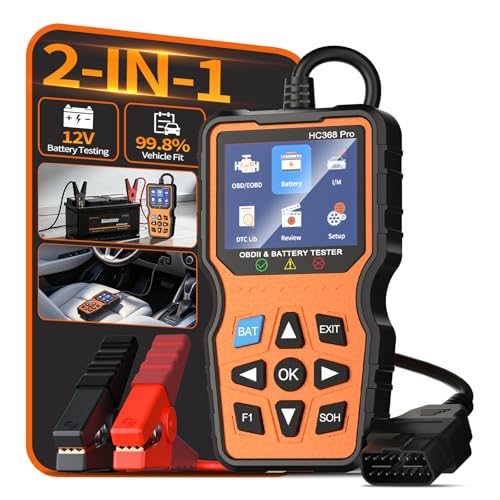
Specification and Compatibility Table
Built only from the product data listed for these units. Where a figure is not published in that data, it is marked "Not stated."
| Product | Primary function | Reads/clears OBD2 codes | Battery test | Vehicle coverage | Price |
|---|---|---|---|---|---|
| OWMSIC OBD2 Scanner with Battery Tester | 2-in-1 code reader + battery/charging analyzer | Yes, 1-second read/clear | Yes, 12V health and charging system | 1996+ cars (universal) | $35.98 |
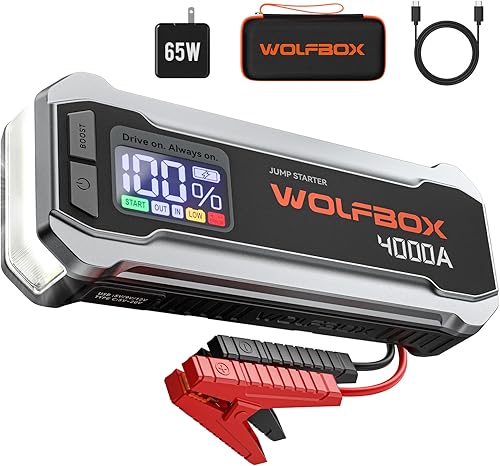
| WOLFBOX 4000A Jump Starter (MV24) | 12V jump starter / power pack | No | Not stated | Up to 10L gas / 10L diesel | $96.89 |
| WOLFBOX MV24 Air 4000A | Jump starter + 160PSI air compressor | No | Not stated | Up to 10L gas / 10L diesel | $139.99 |
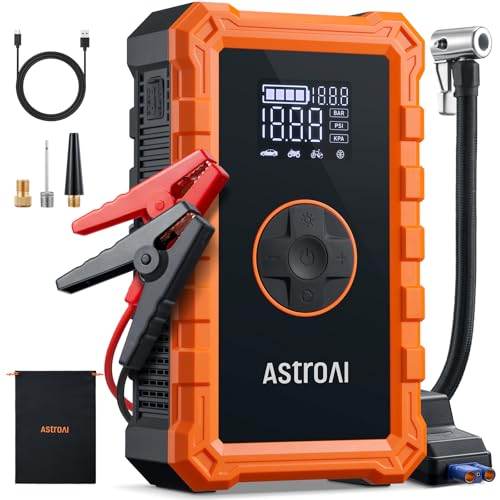
| AstroAI S8 Air 3000A | Jump starter + 150PSI tire inflator | No | Not stated | Up to 9.0L gas / 6.5L diesel | $59.98 |
| JOLTEKON 4500A 150PSI | Jump starter + air compressor | No | Not stated | Up to 9L gas / 8L diesel | $99.99 |
| LUCKFIRE M7 SmartIgnition | Jump starter + tire inflator + 60Wh power bank | No | Not stated | Up to 10L gas / 8.5L diesel | $99.99 |
Last Updated: July 30, 2026
The best obd2 scanner and reset tool for your situation depends on how you plan to use it and where.
The Short Answer
An OBD2 scanner is the reset tool: you plug it into the 16-pin port under your dashboard, read the trouble code, fix whatever the code points to, then use the same tool to clear the code and turn the light off. Clearing a code without fixing the underlying fault only hides the problem for a few drive cycles before the light returns. On any 1996-or-newer car the process is universal, which is why a simple 2-in-1 unit like the OWMSIC OBD2 Scanner with Battery Tester reads and clears check-engine codes and checks battery health from one plug.
What "Scan" and "Reset" Actually Mean
People search for a "scanner and reset tool" as if they are two devices. They are one. The scan reads the diagnostic trouble codes (DTCs) the engine computer has stored, and the reset (clear) function erases those stored codes and commands the computer to turn off the malfunction indicator lamp, which is the check-engine light.
Why clearing is not the same as fixing
The engine control unit re-runs its self-tests every drive cycle. If the fault that set the code is still present, the code comes back and the light returns, usually within a day or two of normal driving. Clearing is the last step of a repair, not a substitute for one.
Where the battery comes in
A weak or dying 12V battery is one of the most common reasons cars throw confusing, unrelated codes. Low voltage during cranking and driving can trip sensor and communication faults that have nothing to do with the parts named in the code. That is why a combined tool that also reads battery health, like the OWMSIC unit that doubles as a 12V battery and charging-system analyzer, saves you from chasing a phantom fault.
Step-by-Step: Read a Code and Clear It Correctly
- Find the OBD2 port. It is a 16-pin trapezoidal socket, almost always within arm's reach under the driver's-side dash, near the steering column. Gotcha: on some cars it hides behind a small pop-off cover or above the pedals, so look up and feel around before assuming it is missing.
- Turn the ignition to ON, engine off. Key to the "run" position (or push start twice without pressing the brake on a push-button car) so the dash lights come on but the engine does not crank. Gotcha: if you plug in with the car fully off, most scanners will not power up because the port is unpowered.
- Plug the scanner in firmly. The connector only fits one way. Gotcha: a half-seated plug gives a "link error" or "no communication" message that people mistake for a broken car.
- Let it establish a link, then read codes. Select Read Codes. A fast reader returns the stored DTCs almost immediately. Gotcha: note every code, not just the first. One root fault often sets several related codes.
- Write down the exact codes. Codes look like P0300 or P0171. Gotcha: the letter matters. P is powertrain, B is body, C is chassis, U is network; do not ignore U-codes, which often point back to wiring or a low battery.
- Diagnose and repair the actual fault. Look up each code, confirm the likely cause, and fix it. Gotcha: this is the step there is no shortcut for. Skipping it means the light returns.
- Check battery and charging health before you clear. If your tool tests the battery, confirm the 12V system is healthy first. Gotcha: clearing codes on a car with a failing battery just resets the clock until the low-voltage codes return.
- Clear the codes. Select Erase/Clear Codes and confirm. The stored DTCs are wiped and the light command is sent. Gotcha: some cars need the engine restarted before the dash light physically goes out.
- Drive a full cycle and re-scan. Drive normally for a day, then read again. Gotcha: if the same code is back, the repair did not hold; if it stays clear, you are done.
What Goes Wrong, and What to Do About It
"No communication" or "linking error"
The symptom is a scanner that powers on but will not talk to the car. Most often the ignition is not in the run position, the plug is not fully seated, or the battery is too flat to power the data bus. Re-seat the plug, turn the key to run, and if the dash is dim, charge or jump the battery first.
The light comes right back after clearing
The symptom is a check-engine light returning within one or two drives. This almost always means the fault was never fixed, only cleared. Re-scan, read the returning code, and treat it as the real repair to make rather than clearing again.
Codes that make no sense together
The symptom is a scatter of unrelated codes across different systems at once. The classic cause is low battery voltage or a bad charging system dragging the whole electrical system down. Test battery health and charging output before you spend money on the parts the codes name.
Cleared codes but the car still runs badly
The symptom is a smooth-looking scan but a rough-running engine. Clearing removes the record, not the problem. If drivability is poor, keep the code data and diagnose the mechanical fault rather than resetting to a clean slate you cannot read.
Pending codes that will not clear
The symptom is a code that reappears as "pending" right after erasing. Pending codes are faults the computer has seen once but not yet confirmed. Drive the car and re-scan; if it matures into a stored code, diagnose it properly.
The takeaway from the table: only the OWMSIC unit actually reads and clears codes. The jump starters solve the other half of the problem, a battery too flat to start or to hold a stable diagnostic link. For the standard on-board diagnostics that make any of this universal, see the on-board diagnostics standard.
When the Fix Is a New One
Sometimes the honest answer is that the tool or the battery is the thing to replace, not the code. Here are the signals, tied to specific products.
Your scanner cannot read battery health, or you have none at all
If you are borrowing a code reader that only pulls DTCs, you are blind to the low-voltage faults that cause half the confusing codes. A combined unit that reads and clears codes and also tests the 12V battery and charging system in one plug closes that gap. That is exactly what the OWMSIC OBD2 Scanner with Battery Tester is built to do for 1996-or-newer cars.
The battery is the real fault and the car will not crank
When your scan keeps pointing back to low voltage, or the car will not turn over to even hold a diagnostic link, you need to restore power before you touch codes again. The AstroAI S8 Air Jump Starter pairs a 3000A jump start for up to a 9.0L gas or 6.5L diesel engine with a 150PSI tire inflator, so one pack covers a dead battery and a soft tire in the same roadside stop.
You want display feedback while reviving a stubborn battery
For larger engines or when you want to see charge state as you work, the WOLFBOX 4000A Jump Starter delivers 4000A for up to a 10L gas or 10L diesel engine, adds an 88.8Wh pack and an LED display, and includes a 65W quick charger to keep the unit topped up. That display takes the guesswork out of whether the pack itself has enough charge to attempt the start.
Frequently Asked Questions
Does clearing a code with the scanner fix the problem?
No. Clearing erases the stored code and turns off the light, but the engine computer re-tests every drive cycle. If the fault is still there, the same code returns within a day or two. Clear only after you have made the repair.
Will one scanner work on my car?
If your car is a 1996 or newer model sold in the US, it uses the standardized OBD2 port and protocol, so a universal reader such as the OWMSIC unit reads and clears generic powertrain codes across brands. Vehicles older than 1996 use pre-OBD2 systems and are not covered.
Why do I have several codes at once?
One root fault often sets several related codes, and low battery voltage can trip a scatter of unrelated ones. Read every code, note which system each belongs to, and check battery and charging health before assuming each code is a separate repair.
The scanner says "no communication." Is my car broken?
Usually not. The three common causes are an ignition not turned to the run position, a plug that is not fully seated, and a battery too flat to power the data bus. Turn the key to run, re-seat the connector firmly, and charge or jump the battery if the dash is dim.
Can a dead battery cause a check-engine light?
Yes. Low voltage during cranking and driving can set sensor and network codes that have nothing to do with the named part. Test the battery and charging system first; a tool that reads codes and battery health together, or a jump starter to restore power, often resolves the mystery.
How long should I drive before re-scanning after a clear?
Drive normally for at least a full day so the computer completes its self-tests, then re-scan. If the code stays gone, the repair held. If it returns, the fault was not fixed and needs a proper diagnosis rather than another clear.
Key Takeaways
- Choosing the right obd2 scanner and reset tool means matching the key features to your specific needs and budget
- Read real customer reviews and check the return policy before you commit
- Also covers: clear check engine light
- Also covers: obd2 code reader
- Also covers: reset check engine light
- Compare value across models — the priciest option is not always the best fit