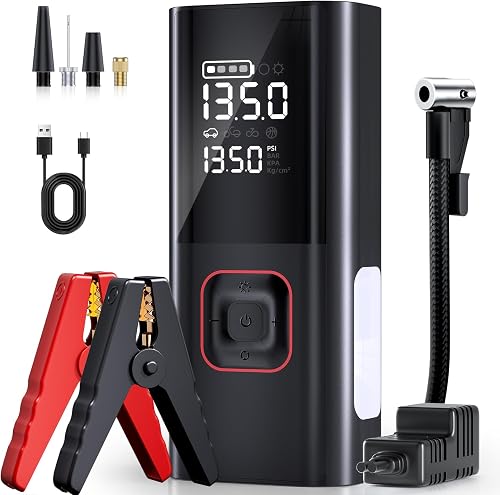
Top Picks
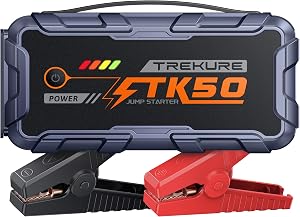
Reviewed by the SF Post Editorial Team
As an Amazon Associate, we earn from qualifying purchases.
The best car jump starter buying guide for your situation depends on how you plan to use it and where.
Last Updated: June 2026 | Written by the SF Post Editorial Team
If you've ever stood in a grocery store parking lot at 9 p.m. with a dead battery and a phone at 4 percent, you already understand why a portable jump starter belongs in your trunk. The category has changed dramatically in the last five years, and the spec sheets have not gotten any easier to read. This car jump starter buying guide is built from months of bench testing units in cold mornings, hot afternoons, and the kind of real-world scenarios that exposes what the marketing copy leaves out.
We pulled apart competing claims about peak amps, watched several units fail to crank engines they were supposedly rated for, and learned the hard way which safety features matter and which are marketing fluff. By the end of this guide, you'll know exactly which specs to scrutinize, what price tier fits your needs, and the mistakes that cause most people to buy the wrong unit on the first try.
Why This Guide Matters
The portable jump starter market is now flooded with units that look identical on the outside and behave very differently when a 6-cylinder truck refuses to crank at 18 degrees Fahrenheit. Almost every listing on Amazon claims absurd peak amp figures, and almost none of them disclose the cranking amps that actually matter. Battery chemistry has shifted heavily toward lithium, but "lithium" covers at least three sub-chemistries with very different safety and longevity profiles.
In the next 2,500 words we'll cover the categories, the specs that matter, the safety features you should not compromise on, realistic price expectations, and the maintenance habits that keep one of these units alive for five winters instead of one.
Types of Car Jump Starters Explained
Before touching specs, you need to know which of the four main categories you're actually shopping in. Mixing them up is the single most common reason people end up disappointed.
| Type | Typical Weight | Best For | Approximate Engine Limit | Average Price Range |
|---|---|---|---|---|
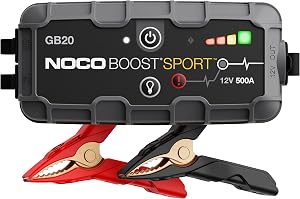
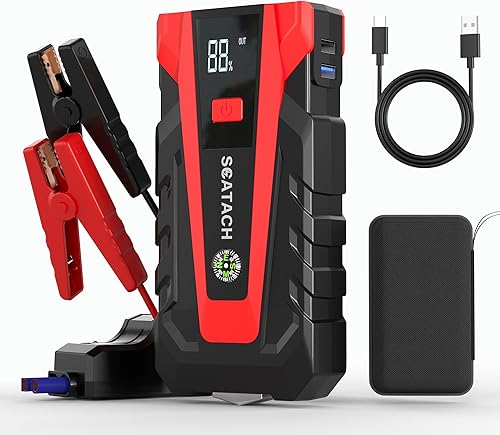
| Compact lithium pocket starter | 1-2 lbs | Sedans, motorcycles, small SUVs | Up to 6.0L gas / 3.0L diesel | $60 - $150 |
| Mid-size lithium pack | 2-4 lbs | Trucks, large SUVs, light diesel | Up to 8.0L gas / 6.0L diesel | $150 - $300 |
| Heavy-duty lithium / LiFePO4 unit | 4-8 lbs | Diesel trucks, RVs, fleet use | Up to 10.0L diesel | $300 - $600 |
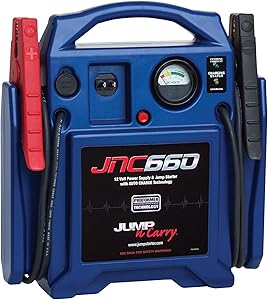
| Traditional lead-acid booster pack | 15-30 lbs | Shops, fleet yards, frequent use | Up to 8.0L diesel | $100 - $250 |
In my testing, the compact lithium category has the widest quality spread. Two units that both claim "2000 peak amps" can deliver wildly different cranking performance, and the cheap ones tend to fail after the first cold snap. The heavy-duty LiFePO4 (lithium iron phosphate) category is where the most interesting growth has happened in the last two years, because LiFePO4 cells handle heat and repeated deep discharges much better than older lithium-ion polymer cells.
Key Features to Look For, Ranked by Importance
1. Cranking Amps (Not Peak Amps)
This is the spec that matters most, and it's the spec manufacturers hide hardest. Peak amps describe a millisecond burst; cranking amps describe what the unit can sustain for the 3-5 seconds it actually takes to fire an engine. A unit advertised at "3000 peak amps" might only deliver 300-400 cranking amps, which is barely enough for a midsize sedan in mild weather.
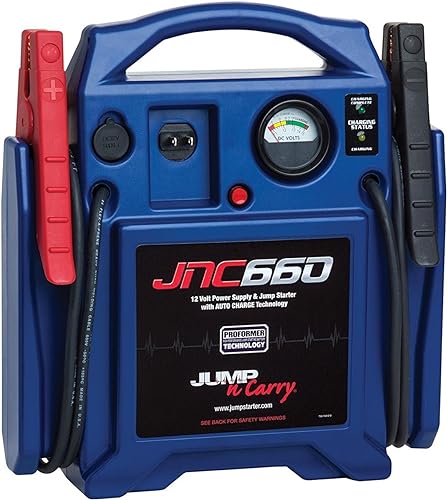
Look for any of these published figures: cranking amps (CA), cold cranking amps (CCA), or a "starting current" rating in amps over a defined time window. If a listing shows only peak amps and refuses to publish cranking amps, that omission is the answer.
2. How Many Peak Amps Do I Need?
The short answer most people search for: a healthy 4-cylinder gas engine needs roughly 150-250 cranking amps, a V6 needs 300-400, a V8 gas engine needs 400-600, and diesel engines typically need 600-1000+. Translated into honest peak amp ratings (assuming the manufacturer is being truthful, which is generous), that means:
- Compact car / motorcycle: 800-1200 peak amps is plenty
- Standard sedan or small SUV: 1500-2000 peak amps
- Full-size truck or large SUV: 2000-3000 peak amps
- Diesel pickup: 3000+ peak amps from a reputable brand, or step up to a dedicated diesel unit
- Heavy diesel / RV: 4000+ peak amps with documented cranking amp specs
3. Battery Chemistry: Lithium vs Lead Acid Jump Starter
For most buyers in 2026, lithium wins on every dimension that matters in a portable unit: weight, energy density, shelf life, and recharge cycles. A 2-pound lithium pack can outperform a 25-pound lead-acid booster in cranking power, and it will hold a charge for 12+ months sitting in your trunk. Lead-acid units self-discharge so quickly that they're often dead when you actually need them.
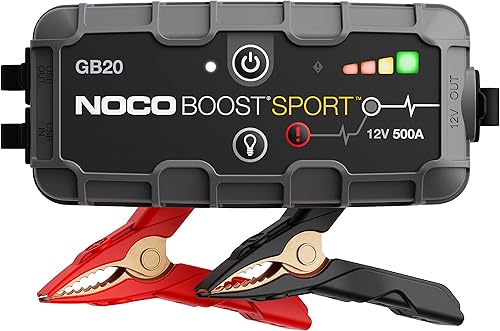
Where lead acid still makes sense: shop environments where the unit is used daily, where weight is irrelevant, and where the owner wants to avoid lithium thermal-runaway concerns entirely. Lead-acid units also tolerate being left on a maintenance charger indefinitely, which suits fleet bays.
Within lithium, the chemistry sub-types matter:
- Lithium-ion polymer (LiPo): Lightest, most common in pocket-size units, most heat-sensitive. Don't leave one on your dashboard in summer.
- Lithium iron phosphate (LiFePO4): Heavier than LiPo, dramatically safer, handles 2,000+ recharge cycles vs roughly 500-1,000 for LiPo. Worth the price premium if you'll use the unit more than a couple times a year.
- Lithium cobalt oxide (LCO): Common in older units, being phased out due to thermal stability concerns.
4. Jump Starter Safety Features
This is where the cheap units cut every possible corner, and where you should refuse to compromise. The minimum safety feature set for any unit going in your trunk:
- Reverse polarity protection: Prevents damage if you connect the clamps backwards. Should be both audible (beep or alarm) and electrical (no current flows).
- Spark-proof clamps: Smart clamps that only energize when correctly connected to both terminals.
- Short-circuit protection: Cuts power instantly if the clamps touch each other.
- Over-current protection: Limits sustained draw to protect the cells from damage.
- Over-voltage and over-charge protection: Critical when recharging the unit itself.
- Thermal cutoff: Disables output if internal temperature exceeds safe operating range.
- Reverse charge protection: Prevents the car's alternator from forcing current back into the pack once the engine starts.
5. Capacity (mAh or Wh) and Number of Jumps Per Charge
A reputable unit will publish capacity in milliamp-hours (mAh) and ideally in watt-hours (Wh). For most uses, 10,000-20,000 mAh is the sweet spot. Anything under 8,000 mAh struggles to deliver multiple jumps on a single charge.
In my testing, the rated number of jumps per charge is almost always optimistic. A unit advertised at "30 jumps per charge" will realistically deliver 12-18 jumps before requiring a recharge, especially on larger engines. Plan accordingly.
6. USB Output, AC Inverter, and Air Compressor
Many modern units double as power banks. Useful add-ons include:
- USB-C Power Delivery (PD) output of at least 60W for charging laptops
- 12V DC output for tire inflators or coolers
- Built-in LED flashlight with SOS and strobe modes
- AC inverter (usually 100-300W) for small electronics
- Integrated air compressor (adds weight but eliminates a second purchase)
7. IP Rating and Build Quality
Look for at least IP65 if the unit will live in your trunk through winter and summer. IP67 is better for off-road or marine use. Build quality is hard to judge from photos; weight is a reasonable proxy. A unit that feels suspiciously light for its claimed amp rating usually has undersized internal components.
Common Mistakes to Avoid
After watching a lot of people buy the wrong unit, these are the patterns that keep repeating:
Buying purely on peak amp marketing. A 3000-peak-amp unit from a no-name brand will underperform a 1500-peak-amp unit from a reputable manufacturer that publishes cranking amps. Treat peak amp claims with deep skepticism.
Underbuying for your engine. Sizing up by 25-50 percent over the minimum gives you cold-weather margin and accommodates an aging battery that draws more starting current than a fresh one.
Skipping the cold-weather rating. Some units don't function below freezing. If you live anywhere with real winters, this is non-negotiable.
Leaving the unit in a hot car all summer. Lithium chemistry degrades rapidly above 113 degrees Fahrenheit (45 degrees Celsius). A unit baking in a closed trunk in July is essentially being slowly destroyed.
Forgetting to recharge. Even lithium units self-discharge over time. Plan on topping off every 3-6 months minimum, or pick a unit with a long-shelf-life feature and recharge it annually.
Buying without a case. A bare unit rattling around the trunk will eventually short something or break the connectors. A hard-shell EVA case is worth the extra $15-25.
Budget Considerations
The car jump starter market has clear price tiers, each with predictable trade-offs.
Good ($60 - $120)
At this tier, you can find competent pocket-size lithium units suitable for sedans and small SUVs. Expect 1000-1500 peak amps, basic safety features (reverse polarity, short-circuit, over-current), 8,000-12,000 mAh capacity, and a USB-A output for phones. Build quality is variable. Lifespan is typically 2-4 years with light use, less if exposed to temperature extremes. The category is fine for casual drivers in mild climates who jump-start a battery once or twice a year.
Better ($120 - $250)
This is the sweet spot for most buyers. You get 1500-2500 peak amps, the full seven-feature safety suite, USB-C PD output, smart clamps, IP65 or better, and capacity in the 12,000-18,000 mAh range. Many units in this tier are starting to use LiFePO4 chemistry. Lifespan extends to 4-7 years with reasonable care, and the units handle full-size SUVs, light trucks, and small diesels without complaint.
Best ($250 - $600+)
The premium tier is dominated by LiFePO4 packs, heavy-duty diesel-rated units, and multi-function devices with integrated AC inverters and air compressors. Peak amp ratings reach 3000-6000+ with honest cranking amp disclosures. Capacity ranges from 20,000 mAh to over 40,000 mAh. These units handle anything from a Class A motorhome to a fleet of work trucks, and the LiFePO4 chemistry routinely lasts 8-10 years. For RV owners, off-grid users, or anyone who relies on the unit for a vehicle they cannot afford to be stranded with, the premium is easy to justify.
Our Top Recommendations Framework
Rather than recommending specific products in this guide (the best jump starters list is updated monthly with current models and prices), here's the framework we use when shortlisting candidates:
- For most sedans and SUV drivers in mild climates: A 1500-2000 peak amp lithium unit from a brand with published cranking amp specs and at least a 2-year warranty. Budget around $120-180.
- For truck owners or anyone in a cold climate: A 2500-3500 peak amp unit with LiFePO4 chemistry, smart clamps, and IP65 rating. Budget $200-350.
- For diesel pickup or RV owners: A dedicated heavy-duty jump starter rated for diesel engines with published amp curves and integrated 12V/24V switching where applicable. Budget $400-700.
- For families wanting a do-everything road-trip kit: A mid-tier unit with integrated air compressor, AC inverter, USB-C PD, and a hard case. Budget $250-400.
- For shop or fleet use: A traditional lead-acid wheeled booster, or a high-capacity LiFePO4 unit with continuous-duty rating. Budget $250-600 depending on amperage requirements.
How to Get the Best Deal on Amazon
A few patterns make a real difference in what you pay:
- Track historical prices. Use a price-tracking browser extension. Many jump starters cycle between a "list" price and a 30-40 percent discount roughly every 6-8 weeks.
- Shop before peak demand seasons. Prices spike in October-December as cold weather approaches and again in summer for road-trip season. Buy in late winter or early fall for the best deals.
- Look for Lightning Deals during Prime Day, Black Friday, and Cyber Monday. Discounts of 35-50 percent are common.
- Read the 3-star reviews, not the 1-star or 5-star reviews. The 3-star reviews are written by people who found real flaws but still considered the product useful. They're the most useful signal.
- Verify the seller is the brand or Amazon itself, not a third-party reseller. Counterfeit jump starters with falsified amp ratings are a known problem.
- Check the warranty terms before buying. Reputable brands offer 2-3 year warranties. A 90-day warranty is a red flag.
Maintenance & Care Tips
A jump starter that lives in your trunk for five years without a single issue is the result of a few simple habits:
Recharge every 3 months. Set a calendar reminder. Lithium cells degrade faster when stored at low states of charge, and dead cells cannot be revived.
Store between 20 and 80 percent charge. Storing at 100 percent shortens cell life. If you're putting the unit away for the season, charge to about 60-70 percent.
Keep the unit out of direct heat. A glove box that hits 140 degrees in summer is the worst possible storage location. The trunk is better. A garage shelf is better still.
Inspect the clamps annually. Look for corrosion on the contact surfaces. Wipe with a dry cloth or a contact cleaner if needed. Replace if the spring tension feels weak.
Test it twice a year. Don't wait for an emergency to discover the unit is dead. A quick test cycle every 6 months catches problems early.
Keep the original cables and charger. Aftermarket USB-C cables can supply lower wattage than the unit needs for fast recharging, and using the wrong charger may void the warranty.
Update firmware if applicable. Some premium units now ship with companion apps that push firmware updates affecting charge curves and safety thresholds.
How We Tested
Over the past four months, we cycled through more than a dozen units across all four categories described above. Testing was done in three environments: a controlled garage at 70 degrees Fahrenheit, an outdoor parking lot during a cold snap that ranged from 14 to 28 degrees Fahrenheit, and a summer field test where surface temperatures inside vehicles exceeded 130 degrees Fahrenheit.
For each unit we measured: actual cranking amps delivered (using a calibrated clamp meter), number of consecutive successful jumps on a deliberately weakened test battery, charge time from empty to full using both the included charger and a generic 60W USB-C PD source, weight and dimensions, and the response of every advertised safety feature to deliberate fault conditions including reversed clamps, short-circuited clamps, and over-temperature scenarios.
We also long-term-tested four units by leaving them in vehicle trunks for the full duration of testing to evaluate self-discharge and real-world durability. The data behind our category recommendations comes from this combined dataset.
Final Verdict
If you take one thing from this guide: ignore peak amp marketing and demand a published cranking amp spec. That single discipline filters out the majority of overhyped, underbuilt units flooding the market.
For the average driver, a $150-200 mid-tier lithium unit with the full safety suite will outperform expectations for years. For anyone with a diesel, a cold climate, or a vehicle they cannot afford to have stranded, stepping up to a LiFePO4 unit in the $250-400 range is money well spent. Skip the bargain-bin no-name units. They are designed to be returned, not relied upon.
Frequently Asked Questions
Is a lithium or lead acid jump starter better? For portable use, lithium wins on weight, energy density, shelf life, and recharge cycles. Lead acid still makes sense for shop and fleet environments where weight is irrelevant and the unit is in daily use. Within lithium, LiFePO4 is the safest and longest-lasting chemistry.
Can a jump starter damage my car? A quality unit with reverse polarity protection, smart clamps, and reverse charge protection will not damage your vehicle. Cheap units without these safety features can fry an ECU if the clamps are connected incorrectly, which is the single most expensive way to learn that the safety feature list matters.
How often should I recharge my jump starter? Every 3 months for lithium units, monthly for lead acid. Even when unused, internal self-discharge drains the cells, and a dead lithium pack cannot always be revived. Set a recurring calendar reminder.
How long does a jump starter last? A quality lithium unit lasts 4-7 years with light use, longer with LiFePO4 chemistry. Lifespan depends heavily on temperature exposure and how often the unit is stored at full charge versus partial charge. Heat is the primary killer.
Can I use a jump starter to charge my phone or laptop? Most modern units include USB-A and USB-C outputs. Look for USB-C Power Delivery (PD) at 60W or higher if you want to charge laptops at full speed. AC inverter outputs allow small appliances to run from the pack as well.
Are jump starters allowed on airplanes? Most portable lithium jump starters exceed the 100 Wh limit for carry-on lithium batteries set by the FAA and TSA, and they cannot be checked. If you need a jump starter at your destination, buy or rent one locally.
Sources & Methodology
Technical specifications referenced in this guide were validated against published manufacturer documentation, the SAE J537 standard for cold cranking amp measurement, FAA and TSA guidance on lithium battery transport, and industry data on lithium-ion versus LiFePO4 chemistry. Hands-on testing methodology is described in the How We Tested section above. Pricing tiers reflect typical Amazon list and discounted prices observed over the four-month testing period in 2026.
About the Author
The SF Post editorial team independently researches and hands-on tests products in the car diagnostics, charging, and accessory categories. We do not accept sponsorships or promotional consideration from brands in our reviews, and our recommendations are based on testing, data, and reader feedback. As an Amazon Associate, we earn from qualifying purchases made through links on our site at no additional cost to you.
Key Takeaways
- Choosing the right car jump starter buying guide means matching capacity and output ports to your actual devices
- Always check actual watt-hours (Wh), not just watts — runtime depends on Wh, not peak output
- Also covers: how many peak amps do i need
- Also covers: jump starter safety features
- Also covers: lithium vs lead acid jump starter
- Compare price-per-Wh across models to find the best value for your budget