Specification table
| Product | Peak amps / output | Capacity | Engine rating | Light | Price |
|---|---|---|---|---|---|
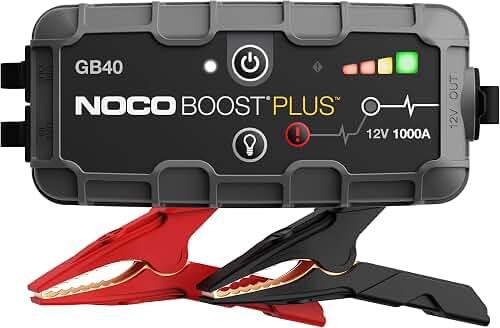
| NOCO Boost GB40 12V 1000A UltraSafe Portable Lithium Jump Starter | 1000A peak | Not stated | Up to 6.0L gas / 3.0L diesel | 100-lumen, 7 modes | Check price on Amazon |
| TREKURE Car Battery Jump Starter 8000A 26800mAh | 8000A peak | 26800mAh | All gas / 12.0L diesel | 800 lumens, 3 modes | Check price on Amazon |
| JOLTEKON Car Battery Jump Starter with Air Compressor 4500A 150PSI | 4500A peak | Not stated | 9L gas / 8L diesel | 500 lumens, 4 modes | Check price on Amazon |
| TREKURE Portable Car Battery Jump Starter 4000A 16800mAh Jump Box | 4000A | 16800mAh | 8.0L gas / 6.5L diesel | 4 modes | Check price on Amazon |
| TREKURE Car Battery Jumper Starter Portable 5000A | 5000A | Not stated | 10L gas / 8L diesel | 2000LM magnetic panel | Check price on Amazon |
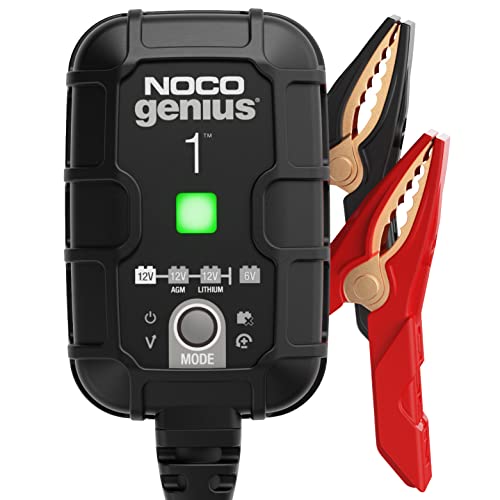
| NOCO GENIUS1: 1A 6V/12V Smart Battery Charger | 1A charging output | N/A (mains powered) | N/A | Not stated | Check price on Amazon |
Quick answer: Most "portable car battery chargers" sold today are actually jump starters — they deliver a huge burst of current to crank a dead engine, then let the alternator do the real charging. If you want to genuinely recharge a flat battery from a portable unit, you need a smart charger like the NOCO GENIUS1, which trickles current in over hours. Know which of the two you're holding, because using a jump starter as a charger will leave you stranded again tomorrow.
The distinction that trips everyone up
A jump starter is a lithium pack that dumps 1000–8000 peak amps into your starter circuit for about two seconds. It doesn't refill your battery. Once the engine fires, drive for 20–30 minutes so the alternator can top the battery up.
A smart charger plugs into a wall outlet and pushes a small, regulated current (often 1 amp) into the battery for hours or overnight. That's actual charging. It's what you want for a battery killed by a dome light, a car that sits all winter, or a battery that's started to sulfate.
Finding the right how to charge car battery portable charger comes down to matching the features to how you will actually use it.
Both are "portable." Only one charges.
How to actually use a portable jump starter
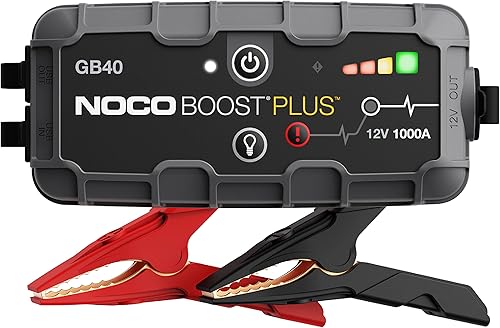
- Charge the pack first. This is the step people skip. A jump starter that's been in the glovebox for a year may still hold charge — TREKURE and JOLTEKON both claim roughly 24 months of standby — but check the indicator before you need it. The NOCO Boost GB40 12V 1000A UltraSafe Portable Lithium Jump Starter recharges in about 3 hours.
- Engine off, keys out, unit powered off.
- Red clamp to the positive terminal, black clamp to negative (or an unpainted engine ground). Good units are spark-proof and reverse-polarity protected, so a wrong connection doesn't blow anything up — but connect correctly anyway.
- Power the unit on. Wait for the status light to say it's armed.
- If the battery is completely at 0V, most modern packs need Force Start / Boost mode engaged manually. This bypasses the safety detection that refuses to output into what looks like no battery at all.
- Crank for 3 seconds max. If it doesn't fire, wait 30 seconds and try again. Repeated long cranks cook the starter, not the pack.
- Disconnect black, then red. Then drive.
How to actually charge a battery from a portable charger
With the NOCO GENIUS1: 1A 6V/12V Smart Battery Charger: connect clamps (red positive, black negative), plug into mains, select the battery chemistry — it handles 6V and 12V lead-acid including AGM, gel, SLA and VRLA, plus LiFePO4 lithium. It charges batteries from as low as 1 volt, and Force Mode handles batteries that have fallen to literally zero. Then leave it. At 1 amp, a flat car battery takes a long time — this is an overnight-and-then-some device, not a lunch-break device. The upside is that it can stay connected indefinitely without overcharging, and its thermal sensor adjusts the charge for ambient temperature so it doesn't overcook in a hot garage or undercharge in a cold one.
Who this is for
- You want to get moving in 60 seconds. A jump starter is the right tool. Buy one, keep it charged, forget about it.
- Your car sits. A classic, a motorcycle, a boat, a second car driven monthly. A maintainer prevents the dead battery in the first place, which is strictly better than fixing it after.
- You don't want to depend on a stranger's car or a tow. The whole appeal is not needing a second vehicle or a good samaritan at 6am.
- You already carry a phone charger, tire gauge and flashlight in the trunk. The combo units collapse three or four of those into one box.
Who should skip it
- If your battery is genuinely dead — as in failing, not discharged. A battery that needs a jump every single morning is telling you it can't hold charge. Repeated jump starting masks the problem. Get the battery load-tested; replace it.
- If your problem is a parasitic drain. Something is drawing current with the car off. A jump starter is a bandage over an electrical fault that will keep coming back.
- If you have modern roadside assistance you actually like. Some people would rather wait 40 minutes than store one more thing.
- If you drive something big and you're eyeing a budget pack. Match the engine rating honestly. A 4000A unit rated to 8.0L gas is not the tool for a heavy diesel.
The honest trade-offs
Peak amp numbers are marketing. Manufacturers measure "peak" in wildly different ways, and there's no enforced standard. An 8000A claim doesn't mean twice the real-world starting ability of a 4000A claim. The engine displacement rating is a far more useful number than peak amps.
Lithium packs self-discharge and age. Even at 24-month standby claims, a pack you never check is a pack that may fail when you need it. Set a calendar reminder every six months.
Cold weather cuts everything. Lithium performance drops as temperature drops. Units quote operating ranges — TREKURE cites -4°F to 140°F, JOLTEKON cites -20°C to 60°C — but the low end is where the pack still functions, not where it performs like it does at 70°F.
More features means more to break. The air compressor units are genuinely convenient — one box that jumps the car and inflates the tire — but they're heavier and there's a motor that can fail.
A jump starter is not battery maintenance. This is the big one. If you're jumping the car regularly, you're managing a symptom.
What to check on the listing before you buy
Listings drift. Before you click buy:
- Current price. The figures here are a snapshot. These products go on and off promotion constantly.
- Which variant you're actually adding to cart. Sellers list multiple capacities and bundle configurations under one product page. The 4000A and the 8000A are different items; make sure the dropdown matches what you decided on.
- What's in the box. Confirm the clamps, charging cable and case are included in the variant you selected, not sold separately.
- Warranty terms and who honors it — the brand or the marketplace seller. Check whether the seller is the brand itself.
- Read recent reviews yourself, filtered to the last few months and to your variant. Older reviews often describe a different hardware revision.
Consider instead if…
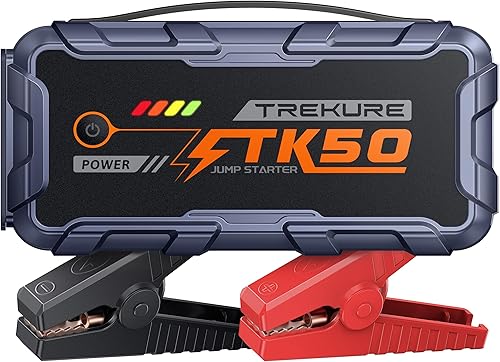
TREKURE Car Battery Jump Starter 8000A 26800mAh, Portable Car Jump Starter for All Gas and 12L Diesel Engines, Power Bank & Battery Jumper, Portable Jump Box Car Battery with Fast Charge, LED Light — consider instead if…
You need headroom for a big diesel. The TREKURE Car Battery Jump Starter 8000A 26800mAh, Portable Car Jump Starter for All Gas and 12L Diesel Engines, Power Bank & Battery Jumper, Portable Jump Box Car Battery with Fast Charge, LED Light is rated for all gas and 12.0L diesel engines, uses 8AWG cables, and carries 26800mAh with an 18W USB port. The 800-lumen light runs over 12 hours. At $89.99 it's the pick when engine size is the deciding factor.
JOLTEKON Car Battery Jump Starter with Air Compressor 4500A 150PSI, Car Jumper Starter Portable (9L Gas/8L Diesel), Jump Box Car Battery with Auto-Shutoff Tire Inflator, Jumper Cables and Light — consider instead if…
Your roadside problems are as often flat tires as flat batteries. The JOLTEKON Car Battery Jump Starter with Air Compressor 4500A 150PSI, Car Jumper Starter Portable (9L Gas/8L Diesel), Jump Box Car Battery with Auto-Shutoff Tire Inflator, Jumper Cables and Light adds a 150PSI compressor with auto-shutoff, five inflation modes, four nozzles, and a 3.3" display, on top of 4500A starting for 9L gas / 8L diesel. $99.99.
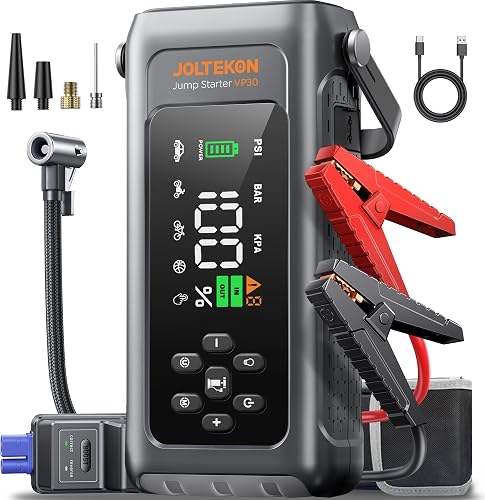
TREKURE Portable Car Battery Jump Starter 4000A 16800mAh Jump Box, Car Battery Jumper Starter Portable Jumper Cables for car(8.0L Gas/6.5L Diesel), Fast Charge, Lights, Compact — consider instead if…
You want basic insurance in the trunk without spending much. The TREKURE Portable Car Battery Jump Starter 4000A 16800mAh Jump Box, Car Battery Jumper Starter Portable Jumper Cables for car(8.0L Gas/6.5L Diesel), Fast Charge, Lights, Compact covers 8.0L gas / 6.5L diesel with 4000A and 16800mAh, in a weatherproof shell with 10 safety protections, at $35.99.
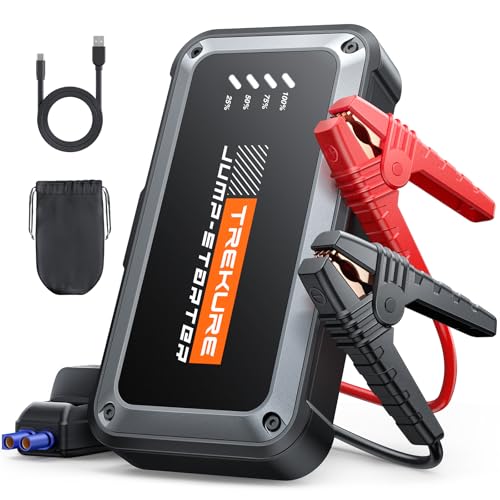
TREKURE Car Battery Jumper Starter Portable 5000A, Portable Car Jump Starter up to 10L Gas or 8L Diesel Engine, Jump Box, Jumper Cables for Car Battery, Magnetic Build, 2000LM Flashlight, Power Bank — consider instead if…
You often work alone in the dark. The TREKURE Car Battery Jumper Starter Portable 5000A, Portable Car Jump Starter up to 10L Gas or 8L Diesel Engine, Jump Box, Jumper Cables for Car Battery, Magnetic Build, 2000LM Flashlight, Power Bank has a magnetic full-panel 2000LM light that sticks to bodywork for hands-free lighting, weighs 0.8 lbs, and covers 10L gas / 8L diesel with Force Start for 0V batteries. $49.99.
FAQ
Can a portable jump starter recharge my battery? No. It provides the burst needed to crank the engine. Recharging happens via your alternator once running, or via a wall-powered smart charger.
How do I charge the jump starter itself? Via its USB input from a wall adapter or USB port. The NOCO Boost GB40 recharges in about 3 hours. Do this before storing it, and check the level every few months.
My battery reads 0 volts — will a jump starter work? Standard mode usually won't; the unit's safety detection sees no battery. Use Force Start / Boost mode, which the TREKURE and JOLTEKON units listed here include. The NOCO GENIUS1 has an equivalent Force Mode for charging down to zero volts.
How long should I drive after a jump? At least 20–30 minutes of steady driving. Short trips won't replace what starting consumed, and you'll be dead again in the morning.
Related guides
- Best car diagnostics, charging and accessories - OBD2 scanners, car battery jump starters, EV chargers and portable car battery chargers with Self-Employment
- OBD2 Scanner Buying Guide: How to Pick the Right One
- Best car diagnostics, charging and accessories - OBD2 scanners, car battery jump starters, EV chargers and portable car battery chargers After Recent Issues
Key Takeaways
- Choosing the right how to charge car battery portable charger means matching the key features to your specific needs and budget
- Read real customer reviews and check the return policy before you commit
- Compare value across models — the priciest option is not always the best fit