Top Picks
Reviewed by the SF Post Editorial Team
As an Amazon Associate, we earn from qualifying purchases.
Last Updated: June 2026 | Written by: The SF Post Editorial Team | Read Time: 8 minutes
"Three button presses later, I had a code, a YouTube rabbit hole, and a ninety-dollar repair instead of the $1,400 quote the dealer had floated."
The first time I plugged an OBD2 scanner into my 2014 Subaru Outback, I sat in the driver's seat for a solid two minutes staring at a blinking cursor, absolutely convinced I was about to brick the car. Spoiler: I wasn't. Three button presses later, I had a code (P0420, catalytic converter efficiency below threshold), a YouTube rabbit hole, and a ninety-dollar fix instead of the $1,400 quote the dealer had so casually floated past me.
That single moment is the entire reason I now keep a scanner in my glovebox like a second wallet, and the reason I tell every driver I meet to learn how to use an OBD2 scanner before the next check engine light surprises them at the worst possible moment.

This guide walks through exactly what I do, in the exact order I do it, every single time that dreaded amber light flickers to life. No jargon dumps. No filler. No upsells. Just the playbook that's saved me thousands and put me back in the driver's seat of every repair decision I've faced since.
Why This Guide Matters: The Numbers Don't Lie
- An OBD2 scanner is the single highest-ROI tool you can keep in your glovebox.
- You only need three skills: find the port, pull the code, look it up.
- The scanner tells you what is wrong, not why. Both matter, and confusing them is how drivers overpay.
- Bluetooth dongles paired with a $5 app can rival $300 handheld units for daily use.
- Pulling a code does not commit you to the repair. Knowledge is the leverage.
The 5-Minute Playbook: From Warning Light to Diagnosis
If you remember nothing else from this guide, remember this sequence. It is the entire workflow I run, in the exact order, every time.
It is almost always within arm's reach of the driver's left knee, under the dash. Trapezoidal shape, 16 pins. If you cannot find it in 30 seconds, search "OBD2 port location" plus your make and model.
Then turn the key to ACC or ON (not start). The scanner powers up from the port. No batteries, no fuss.
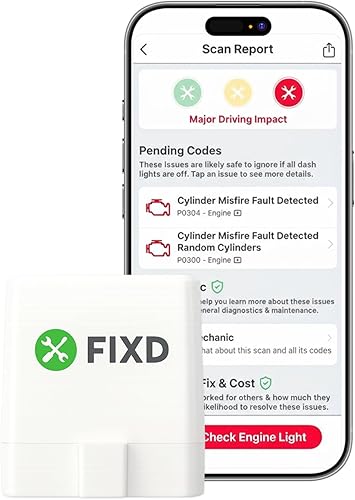
Most scanners auto-connect within 10 seconds. Choose "Read Codes" or "Diagnose." Write down every code that appears, including pending ones.
A P0xxx code is generic across all vehicles. A P1xxx is manufacturer-specific. Look it up at a reputable site, then cross-reference it on a model-specific forum.
DIY repair, trusted indie mechanic, or dealer. The point is you now choose from a position of information, not panic.
Watch It Happen: The 5-Minute Walkthrough in Real Time
Reading the steps is useful. Watching them executed on an actual car is unforgettable. The video below mirrors the workflow above on a real vehicle, so you can see exactly what the screen looks like at each stage before you ever touch the port yourself.
Reading the Code Like a Pro: What the Letters Actually Mean
The alphabet soup looks intimidating until you realize it follows a very logical pattern. Decode the first character and you have already narrowed the problem to a quarter of the car.
Never act on a single code in isolation. A P0420 might point at the catalytic converter, but it could also be a lazy oxygen sensor upstream costing $40 instead of $900. Cross-check freeze-frame data and live sensor readings before you spend a dollar on parts.
Choosing Your First Scanner: A No-Nonsense Buyer's Lens
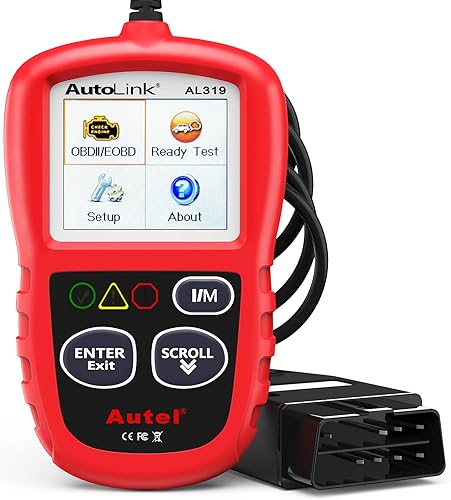
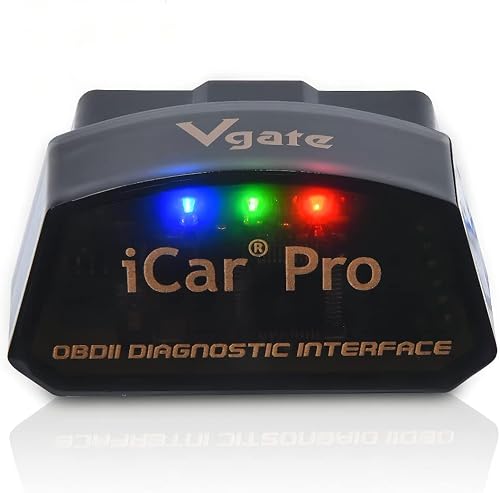
The market is loud. The truth is quiet. There are really only three categories worth your attention, and the right pick depends entirely on how deep you intend to go.
The Mistakes That Cost Drivers Hundreds (Don't Be This Person)
- Clearing codes before the repair. The light comes back in two days, the data is gone, and you have learned nothing.
- Trusting the first Google result. Generic code definitions are a starting line, not a diagnosis. Find a model-specific forum.
- Buying a scanner you cannot read. If the menu is in stilted English and the buttons feel like a TV remote from 2003, return it.
- Ignoring pending codes. Those are warnings that have not yet triggered the light. They are the cheapest fixes you will ever make.
- Skipping freeze-frame data. The snapshot of conditions when the code triggered is half the diagnostic story.
Frequently Asked Questions
No. Reading codes is a passive operation. The Magnuson-Moss Warranty Act actively protects your right to diagnose your own vehicle. Aftermarket modifications are a different conversation.Will using an OBD2 scanner void my warranty?
Quality dongles with proper sleep modes are fine. Cheap clones can draw current even when the car is off and slowly drain your battery. If in doubt, unplug it after each use.Can I leave a Bluetooth dongle plugged in permanently?
Absolutely, and you should. Pending codes and readiness monitors live in the system even when the dash is dark. It is the best preventive habit a driver can build.My check engine light is off but I want to scan. Can I?
Generic OBD2 covers basic emissions and powertrain codes on hybrids. Pure EVs have an OBD2 port but most manufacturer-specific data requires brand-specific tools or apps. Generic scanners still pull universal codes.Does the scanner work on EVs and hybrids?
The Bottom Line
An OBD2 scanner is not a mechanic in a box. It is a translator, a flashlight in a dark room, a $25 tool that flips the power dynamic of every repair conversation you will ever have. The dealer no longer holds the only set of facts. You do.
Learn this workflow once and you will use it for the rest of your driving life. The next time that amber light glows on your dash, you will not feel dread. You will feel curious. And that single shift, from fear to information, is worth every minute you spent reading this guide.
Key Takeaways
- Choosing the right how to use an OBD2 scanner means matching capacity and output ports to your actual devices
- Always check actual watt-hours (Wh), not just watts — runtime depends on Wh, not peak output
- Also covers: OBD2 scanner instructions
- Also covers: reading car diagnostic codes
- Also covers: where is the OBD2 port
- Compare price-per-Wh across models to find the best value for your budget